
Quick Answer
To help a nervous dog, create a safe space, maintain consistent routines, use positive reinforcement training, consider calming aids like pheromone diffusers, and gradually expose them to triggers at a comfortable pace. For severe cases, consult a veterinary behaviorist. Nervous dogs need patience, understanding, and time to build confidence.
This article provides educational information about dog anxiety and is not a substitute for professional veterinary advice, diagnosis, or treatment. Always consult a licensed veterinarian for any medical concerns about your dog. If your dog shows signs of severe anxiety, aggression, or health issues, seek immediate professional help. Never administer any medications, supplements, or treatments without explicit veterinary approval.
Understanding Dog Anxiety: My Journey with Rescue Dog Bailey
When I adopted Bailey, a three-year-old border collie mix, I had no idea how deeply anxiety would affect his daily life. He trembled at every car ride, cowered when meeting other dogs, and spent his first week hiding under my bed. Through months of patience, professional guidance, and evidence-based techniques, Bailey transformed from a fearful dog into a confident companion. This experience taught me that helping nervous dogs requires understanding, consistency, and the right approach.
According to the American Veterinary Medical Association, anxiety disorders affect approximately 20-40% of dogs, making it one of the most common behavioral issues pet owners face.
What Makes Dogs Nervous? Common Triggers and Causes
Environmental Triggers
Dogs can develop nervousness from various sources:
- Past trauma or lack of socialization: Rescue dogs and those from puppy mills often show heightened anxiety
- Genetic predisposition: Some breeds are more prone to anxious behaviors
- Medical conditions: Pain, hormonal imbalances, or neurological issues
- Environmental changes: Moving homes, new family members, or schedule disruptions
- Loud noises: Thunderstorms, fireworks, or construction sounds
Research from Tufts University Cummings School of Veterinary Medicine indicates that early life experiences significantly impact a dog’s stress response throughout their lifetime.
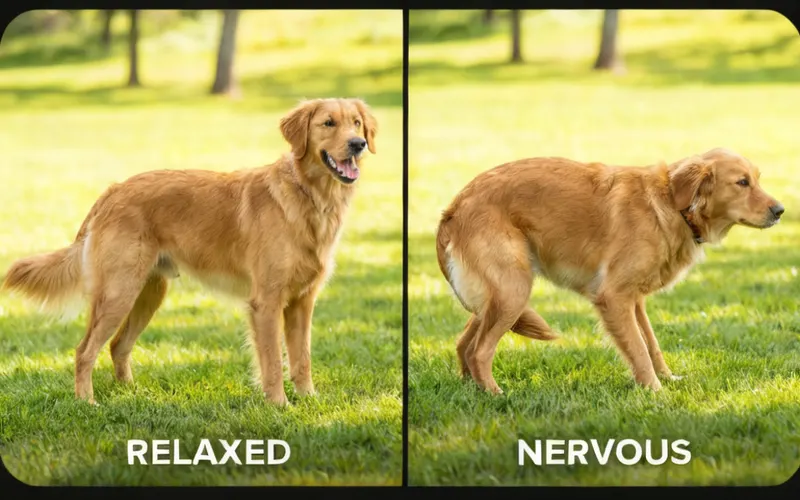
Signs Your Dog Is Nervous
| Physical Signs | Behavioral Signs |
|---|---|
| Trembling or shaking | Excessive barking or whining |
| Panting when not hot | Destructive behavior |
| Dilated pupils | Aggression or snapping |
| Tucked tail | Attempting to escape |
| Flattened ears | Excessive licking or yawning |
| Drooling | House soiling despite training |
Note: If these nervous behaviors occur specifically when you’re preparing to leave or while you’re away, your dog may have separation anxiety rather than general nervousness. Take our quiz to find out: Does My Dog Have Separation Anxiety? (Quiz + Expert Signs)
How to Help a Nervous Dog: 10 Proven Techniques
1. Create a Safe Haven
Every nervous dog needs a designated safe space where they can retreat when feeling overwhelmed. I set up Bailey’s sanctuary in a quiet corner with:
- A comfortable crate or bed covered with blankets
- Calming music or white noise
- His favorite toys and chews
- An item with my scent
The American Kennel Club emphasizes that safe spaces help dogs self-regulate their emotions and reduce stress hormones.

2. Establish Predictable Routines
Consistency provides security for anxious dogs. Feed, walk, and play with your dog at the same times daily. Predictable patterns help nervous dogs anticipate what’s coming next, reducing anxiety about the unknown.
3. Use Positive Reinforcement Training
Never punish nervous behavior, as this intensifies fear. Instead, reward calm behavior with treats, praise, and affection. When Bailey showed courage—even small acts like approaching the car—I immediately rewarded him with high-value treats.
4. Practice Gradual Desensitization
Expose your dog to anxiety triggers slowly and at low intensity:
- Start at a distance where your dog notices the trigger but remains calm
- Reward relaxed behavior
- Gradually decrease distance over days or weeks
- Never force your dog to confront their fears
5. Try Counterconditioning
Change your dog’s emotional response by pairing the trigger with something positive. Bailey was terrified of car rides, so I started feeding him meals near the parked car, then inside it with the engine off, gradually building positive associations.
6. Consider Calming Products and Aids
Several non-medical products can support nervous dogs:
- Adaptil (Dog Appeasing Pheromone): Mimics calming pheromones mother dogs produce
- Thundershirt or anxiety wraps: Apply gentle pressure that can reduce anxiety
- Calming music or white noise machines: Can mask startling sounds
- Interactive puzzle toys: Provide mental stimulation and distraction

For any supplements or medications, always consult your veterinarian first. Your vet can recommend safe, appropriate options specifically for your dog’s needs.
7. Increase Physical and Mental Exercise
A tired dog is typically a calmer dog. Provide:
- Regular daily walks in low-stress environments
- Puzzle toys and food-dispensing games
- Scent work or nose games
- Training sessions that build confidence
8. Use Calming Touch Techniques
Learn T-Touch or other massage techniques designed for anxious dogs. Slow, deliberate strokes can activate the parasympathetic nervous system, promoting relaxation.
9. Avoid Reinforcing Nervous Behavior
While you should never punish anxiety, be mindful not to excessively comfort your dog during fearful episodes, as this can inadvertently reinforce the behavior. Instead, remain calm and redirect their attention to something positive.
10. Consult Professional Help When Needed
If your dog’s anxiety significantly impacts their quality of life, seek help from:
- Certified Applied Animal Behaviorists (CAAB)
- Veterinary behaviorists (DACVB)
- Certified Professional Dog Trainers (CPDT-KA)
Severe cases may benefit from anti-anxiety medication prescribed by your veterinarian.
How to Help a Nervous Dog in the Car
Car anxiety is extremely common, affecting roughly 20% of dogs according to veterinary behavior specialists. Here’s the step-by-step approach that worked for Bailey:
Progressive Desensitization for Car Rides
Week 1-2: Feed meals near the parked car, creating positive associations
Week 3-4: Feed meals inside the car with doors open and engine off
Week 5-6: Close doors, still engine off, high-value treats throughout
Week 7-8: Turn engine on briefly, reward calm behavior
Week 9-10: Short drives around the block, gradually extending distance
Additional Car Anxiety Tips
- Place a familiar blanket or bed in the car
- Use window shades to reduce visual stimulation
- Consider crate training for safety and security
- Try ginger treats 30 minutes before travel to prevent nausea
- Avoid feeding 2-3 hours before car rides
- Keep the car well-ventilated and at a comfortable temperature
How to Help a Nervous Rescue Dog
Rescue dogs often carry emotional baggage from their past. Having worked with several rescue organizations, I’ve learned these dogs need extra patience and understanding.
The 3-3-3 Rule for Rescue Dogs
| Timeframe | What to Expect | How to Help |
|---|---|---|
| First 3 Days | Overwhelmed, scared, shut down behavior | Provide quiet space, minimal demands, establish basic routine |
| First 3 Weeks | Settling in, showing true personality, testing boundaries | Begin training, maintain consistency, build trust gradually |
| First 3 Months | Feeling comfortable, confident, secure in environment | Continue training, expand experiences, deepen bond |
Special Considerations for Rescue Dogs
- Allow them to approach you rather than forcing interaction
- Don’t overwhelm with too many visitors initially
- Respect their need for alone time
- Document progress with photos and videos—small victories matter
- Connect with the rescue organization for background information
- Consider professional behavioral assessment
The ASPCA provides excellent resources specifically for helping fearful rescue dogs adjust to new homes.
How to Help a Nervous Dog Around Other Dogs
Dog-to-dog anxiety stems from various sources: lack of socialization, negative past experiences, or fear-based aggression. Here’s how to help your dog gain confidence around other canines:
Controlled Socialization Strategies
Start with Distance: Begin at a distance where your dog notices other dogs but remains under threshold (not reactive). This might be 50 feet or more initially.
Parallel Walks: Walk alongside another calm dog with plenty of space between you. Gradually decrease distance over multiple sessions.
Neutral Territory: Introduce dogs in neutral locations rather than at home where territorial instincts activate.
Choose Appropriate Playmates: Select calm, well-socialized dogs for initial interactions. Avoid dog parks until your dog shows confidence.
Watch Body Language: Learn to read stress signals and intervene before anxiety escalates into fear-based reactivity.
Reward Calm Behavior: Treat your dog every time they look at another dog without reacting negatively.
When to Seek Professional Help
If your dog shows aggression, lunging, or extreme fear around other dogs, work with a certified trainer before attempting socialization. Improper exposure can worsen anxiety.
How to Help a Nervous Dog Gain Confidence
Building confidence in nervous dogs requires strategic experiences that allow them to succeed without overwhelming them.
Confidence-Building Activities
Trick Training: Teaching new tricks provides mental stimulation and accomplishment. Start simple with “touch” or “spin” commands.
Obstacle Courses: Create low-level obstacles your dog can navigate successfully. Even stepping over a broomstick builds confidence.
Nose Work: Dogs feel confident using their natural scenting abilities. Hide treats around the house for them to find.
Swimming: If your dog enjoys water, swimming provides exercise and a confidence boost in a low-impact environment.
Agility Training: Low-level agility work (tunnels, low jumps) helps fearful dogs overcome obstacles literally and figuratively.
Real Experience: Bailey’s Confidence Journey
Bailey’s breakthrough came during our sixth month together. We attended a beginner’s agility class where he successfully navigated a tunnel for the first time. The joy in his eyes and the proud prance afterward showed me he was finally believing in himself. That single success motivated him to try other challenges, transforming his entire demeanor.
How to Help a Very Nervous Dog: Advanced Strategies
Some dogs experience severe anxiety that requires more intensive intervention.
Professional Veterinary Support
For severe anxiety cases, consult your veterinarian who can:
- Conduct a thorough health examination to rule out medical causes
- Refer you to a veterinary behaviorist (DACVB) for specialized care
- Discuss all available treatment options appropriate for your dog
- Create a comprehensive treatment plan combining multiple approaches
Studies published in the Journal of Veterinary Behavior demonstrate that combining professional behavioral training with veterinary care produces significantly better outcomes than either approach alone.
Behavior Modification Programs
Professional behaviorists create customized programs including:
- Systematic desensitization protocols
- Counterconditioning plans
- Relaxation training exercises
- Environmental management strategies
Alternative Therapies
Some owners explore complementary approaches with veterinary guidance:
- Acupuncture performed by certified veterinary acupuncturists
- Therapeutic massage by trained canine massage therapists
- Aromatherapy in consultation with your veterinarian
- Sound therapy specifically designed for dogs
Always discuss alternative therapies with your veterinarian before trying them to ensure they’re safe and appropriate for your dog.
Diet and Nutrition for Nervous Dogs
Emerging research suggests gut health may impact canine anxiety. The gut-brain axis—the connection between digestive health and mental wellbeing—functions in dogs similarly to humans.
Important: Always work with your veterinarian when considering dietary changes for anxiety management. Your vet can recommend appropriate nutritional approaches based on your dog’s individual health needs and ensure any changes are safe and beneficial.
Nutritional Approaches
Consult your veterinarian before making significant dietary changes. Emerging research suggests gut health may impact canine anxiety through the gut-brain axis. Your veterinarian can:
- Recommend veterinary-formulated supplements if appropriate
- Suggest specialized diets that may support calm behavior
- Help identify if food ingredients might affect your dog’s behavior
- Create a nutrition plan tailored to your dog’s specific needs
Common Mistakes to Avoid When Helping Nervous Dogs
Through my experience and conversations with veterinary behaviorists, these are the most common errors owners make:
Forcing Confrontation: Never force your dog to face their fears head-on. This technique, called “flooding,” often backfires and intensifies fear.
Inconsistent Training: Anxiety improvement requires consistency from all family members. Mixed messages confuse nervous dogs.
Punishment: Correcting fearful behavior increases anxiety and damages trust.
Moving Too Quickly: Rushing desensitization causes setbacks. Progress at your dog’s pace, not yours.
Ignoring Medical Causes: Always rule out pain or illness before assuming behavioral causes.
Expecting Quick Fixes: Building confidence takes months or years. Celebrate small victories.
Frequently Asked Questions
How long does it take to help a nervous dog overcome anxiety?
The timeline varies significantly based on the severity of anxiety, the dog’s history, and consistency of intervention. Mild anxiety might improve within weeks, while severe cases can take 6-12 months or longer. Some dogs require lifelong management. The key is consistent, patient work and celebrating incremental progress.
Can nervous dogs ever become fully confident?
Many nervous dogs show dramatic improvement and live happy, fulfilled lives, though some retain mild anxiety tendencies. The goal isn’t to create a fearless dog but rather a dog who can cope with normal life stressors without significant distress. Bailey, my rescue dog, still prefers quiet environments but no longer lives in constant fear.
Should I comfort my dog when they’re nervous?
This is nuanced. Excessive soothing can inadvertently reinforce anxious behavior, but completely ignoring a terrified dog is unkind. The best approach is remaining calm yourself, redirecting to positive activities, and rewarding brave behavior. Your calm presence provides reassurance without reinforcing the fear response.
What’s the difference between nervousness and aggression in dogs?
Nervous dogs often display fear-based aggression—barking, lunging, or snapping because they’re afraid, not dominant. True aggression stems from different motivations. However, chronic anxiety can develop into aggressive behavior, which is why addressing nervousness early is crucial. A professional evaluation helps distinguish between these issues.
Are certain dog breeds more prone to anxiety?
Yes, genetic predisposition plays a role. Herding breeds (Border Collies, Australian Shepherds), toy breeds (Chihuahuas, Yorkshire Terriers), and some working breeds show higher anxiety rates. However, individual temperament and early experiences matter more than breed alone.
Can nervous dogs go to dog parks?
Generally, dog parks are overwhelming for nervous dogs. The unpredictable environment with multiple dogs, varying energy levels, and limited control creates stress rather than building confidence. Structured, controlled socialization with calm, known dogs in neutral spaces proves more effective.
What should I do if my dog’s anxiety is getting worse?
Seek professional help immediately. Worsening anxiety suggests your current approach isn’t working, or an underlying medical issue needs attention. Contact your veterinarian first to rule out health problems, then request referral to a veterinary behaviorist or certified dog behavior consultant.
Is medication necessary for nervous dogs?
Not always. Many mildly to moderately anxious dogs improve with behavior modification alone. However, severe anxiety cases may benefit from professional veterinary care that could include various treatment options. Your veterinarian is the only one qualified to determine if medical intervention is appropriate for your dog’s specific situation and can discuss all available options with you. Never give your dog any medications or supplements without explicit veterinary approval.
Creating Your Action Plan
Helping a nervous dog requires commitment, but the rewards are immeasurable. Here’s your starting checklist:
Immediate Steps (This Week)
- Schedule veterinary exam to rule out medical causes
- Create a safe space in your home
- Begin tracking anxiety triggers in a journal
- Research local certified trainers or behaviorists
Short-term Goals (First Month)
- Establish consistent daily routines
- Begin basic desensitization to primary triggers
- Implement calming aids (pheromones, music, supplements)
- Start confidence-building activities
Long-term Commitment (3-12 Months)
- Continue behavior modification protocols
- Gradually expand your dog’s comfort zone
- Celebrate and document progress
- Adjust strategies based on results
Final Thoughts: The Journey Is Worth It
Watching Bailey transform from a trembling, fearful dog into a companion who greets each day with cautious optimism has been one of my life’s most rewarding experiences. Yes, he still prefers calm environments and avoids crowded dog parks, but he no longer lives in constant fear.
Every nervous dog deserves an owner willing to invest the time and patience required for improvement. Your dog didn’t choose anxiety—but with your help, they can learn to manage it. The bond you’ll build through this process creates trust deeper than most pet-owner relationships achieve.
Remember that progress isn’t linear. You’ll have setbacks and frustrating days. But each small victory—the first car ride without panting, the first peaceful encounter with another dog, the first time they choose to leave their safe space to join you—makes every challenge worthwhile.
Your nervous dog can improve. With knowledge, consistency, and love, you can help them discover the confident, peaceful life they deserve.
References:
- American Veterinary Medical Association: https://www.avma.org
- American Kennel Club: https://www.akc.org
- ASPCA Animal Behavior: https://www.aspca.org
- Tufts University Cummings School of Veterinary Medicine: https://vet.tufts.edu
- Cornell University College of Veterinary Medicine: https://www.vet.cornell.edu
2 thoughts on “How to Help a Nervous Dog: Complete Guide to Calming Anxious Dogs”
Comments are closed.