
There are few things more heartbreaking for a pet owner than watching your dog suffer. The constant thumping of a leg scratching against the floor, the chewing at paws until they are raw, and the restless nights—it is exhausting for you, but it is miserable for them.
If you are currently searching for home remedies for dogs itchy skin, you are not alone. Pruritus (the medical term for itching) is one of the top reasons for veterinary visits. However, you don’t always need expensive pharmaceuticals or steroid shots to provide comfort. Nature has provided us with powerful ingredients that can soothe inflammation, kill bacteria, and restore moisture to your dog’s coat.
In this comprehensive guide, we will explore scientifically backed homemade itch relief for dogs that you can whip up in your kitchen right now. From the soothing power of colloidal oatmeal to the antimicrobial properties of coconut oil, we will cover how to stop the scratch and treat the root cause.
Why Is My Dog So Itchy? (Root Cause Analysis)
Before we dive into the remedies, we must understand the enemy. Treating the symptom (the itch) without addressing the cause is a losing battle. While immediate relief for dog itching is our goal, knowing why they are itching ensures the remedy actually works.
Veterinary Insight: Dr. Gary Richter, MS, DVM (Integrative Veterinarian): Dr. Richter emphasizes in his writings that “skin issues are almost always a reflection of what is happening inside the body.” He warns that while topical remedies soothe the symptom, you must address the root cause—often diet or environmental toxins—to stop the itching for good.
1. Environmental Allergens (Atopic Dermatitis)
Just like humans, dogs can suffer from seasonal allergies. Pollen, grass, mold spores, and dust mites are common culprits. If your dog starts itching primarily in the spring or fall, or immediately after a walk in long grass, environmental factors are likely at play. This condition, known as Atopic Dermatitis, often manifests as paw licking and face rubbing.
2. Food Sensitivities and Allergies
While true food allergies are rarer than most people think, food sensitivities are common. Ingredients like chicken, beef, dairy, or gluten can trigger an inflammatory response in the gut that manifests on the skin.
If you suspect your dog’s itching is linked to their diet—especially if they also suffer from ear infections or digestive issues—you need a more targeted approach. For a deep dive into managing these specific immune responses, read our detailed guide on home remedies for a dog with allergies, which covers elimination diets and histamine management.
3. Parasites and Bacterial Infections
Fleas are the number one cause of excessive scratching. Even if you don’t see them, flea allergy dermatitis (FAD) means a single bite can send your dog into a scratching frenzy for weeks. Additionally, yeast infections (Malassezia) and bacterial overgrowth thrive on inflamed skin, creating a vicious cycle of itching and scratching that simple soothing creams can’t fix.
4. Dry Skin (Winter Itch)
Central heating in winter and air conditioning in summer can strip the natural oils from your dog’s coat, leading to dry, flaky, and itchy skin. This is often the easiest cause to treat with topical moisturizers.
⚠️ Safety First: Before You Begin
Before applying any home remedies for dogs itchy skin, please perform this quick safety check:
- Check for Open Wounds: Do not apply Vinegar, Alcohol, or Lemon-based remedies to raw or bleeding skin. It will cause intense stinging.
- The “Patch Test”: Apply a small amount of the remedy to a 1-inch patch of skin behind the ear. Wait 24 hours to ensure no allergic reaction occurs.
- Know the Source: If the itching is accompanied by foul odors, hair loss, or lethargy, these remedies may not be enough. Visit a vet immediately.
Top 10 Topical Home Remedies for Dogs Itchy Skin
These remedies are designed to be applied directly to the skin for fast relief.
(Note: Always ensure your dog’s skin is free of open, bleeding wounds before applying liquid treatments like vinegar.)
1. Colloidal Oatmeal Baths: The Gold Standard
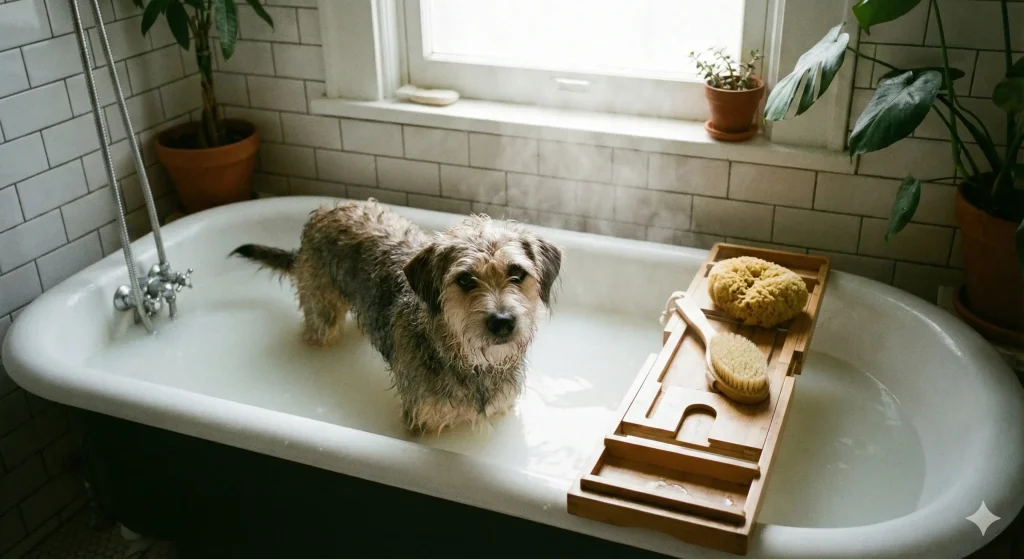
If there is one king of itch relief for dogs, it is colloidal oatmeal. This isn’t just the breakfast cereal in your pantry; “colloidal” means the oats have been ground into a fine powder that suspends in water rather than sinking to the bottom.
- The Science: According to the American Kennel Club (AKC), Oatmeal contains avenanthramides and phenols, chemical compounds that have potent anti-inflammatory and antioxidant properties. When suspended in water, the oatmeal creates a protective, slime-like barrier over the skin that locks in moisture and cools the heat of the itch.
- How to Make It (DIY):
- Take 1 cup of plain, sugar-free organic oats (instant or slow-cooking are fine, but no flavorings).
- Grind them in a blender or coffee grinder on the highest setting until they become a super-fine flour.
- The Test: Stir a tablespoon into a glass of warm water. If the water turns milky and feels silky, it’s ready. If the oats sink to the bottom, grind them finer.
- The Application Protocol:
- Fill a bathtub with warm (not hot) water. Hot water makes itching worse!
- Mix the oat powder in until the water looks cloudy.
- Place your dog in the tub and let them soak for at least 10–15 minutes.
- Use a cup to pour the milky water over their back, neck, and stubborn itchy spots.
- Crucial Step: When finished, pat them dry with a towel. Do not rub. Rubbing irritates the skin, while patting leaves a thin layer of the oatmeal barrier on the skin to keep working.
“Be warned: a wet, oatmeal-covered dog is slippery! Put a non-slip mat in the tub before you start. Also, don’t rinse it all off completely—leaving a little bit of that ‘milky’ residue helps protect the skin after they dry.”
2. Apple Cider Vinegar (ACV) Rinse
Apple Cider Vinegar is a staple in the natural health world. For dogs with yeast infections (smelly paws/ears) or bacterial hot spots, ACV is a miracle worker.
- The Science: Healthy dog skin has a slightly acidic pH (around 5.5 to 7.2). When dogs scratch, or when yeast overgrows, the skin becomes too alkaline. ACV consists of acetic acid, which helps restore the natural pH balance, making the skin an inhospitable environment for yeast and bacteria to survive.
- The “50/50 Rule” (Strict Safety Warning):
- NEVER apply undiluted vinegar to a dog’s skin. It will burn.
- NEVER apply vinegar to open, bleeding, or raw wounds. It will sting intensely and cause your dog to fear the treatment.
- How to Use It:
- The Spray: Mix 50% Apple Cider Vinegar (with “The Mother”) and 50% filtered water in a clean spray bottle. Shake well and mist onto itchy patches or the coat. Do not rinse it off; let it air dry.
- The Paw Soak: If your dog chews their paws, mix the solution in a bowl. Dip each paw for 5 minutes. This kills the yeast between the toes that causes the “Frito Corn Chip” smell.
Veterinary Insight: Dr. Karen Becker (Integrative Wellness Veterinarian): Dr. Becker frequently advises that while ACV is excellent for yeast, you must “never apply it to open wounds.” She recommends doing a spot test first, as the acidity can cause intense stinging on raw skin, which will make your dog afraid of the treatment.
3. Coconut Oil Massage
🛁 Get the Remedy *To* The Skin (Not Just the Fur)

Thick fur prevents Oatmeal or Coconut Oil from reaching the itchy skin. This Massage Brush pushes the remedy deep down while soothing the itch.
- ✅ Deep Penetration: Soft rubber bristles massage remedies past the undercoat.
- ✅ Soothing Massage: Relieves the itch without scratching or damaging raw skin.
- ✅ Shampoo Dispenser: Pour the treatment inside for mess-free application.
Only $17.99
Get The Massage Brush →Coconut oil is one of the safest homemade itch relief for dogs treatments because it works both topically and internally.
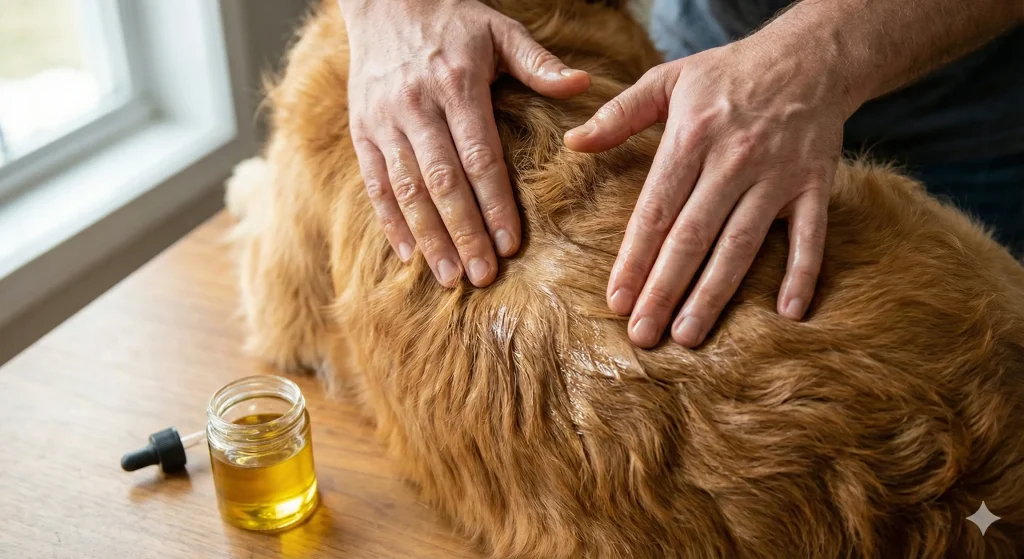
- The Science: High-quality virgin coconut oil is rich in Lauric Acid, a medium-chain fatty acid that has natural antibacterial, antiviral, and antifungal properties. Unlike water-based lotions that evaporate, oil penetrates the hair shaft and skin barrier to deeply moisturize dry eczema and flaky skin.
- How to Use It:
- Chill It: It’s easier to handle when solid (kept in the fridge).
- Melt It: Scoop a small amount and rub it between your palms. It will melt instantly from body heat.
- Massage: Rub it directly into the dry patches, calluses, or “hot spots.” Spend 2-3 minutes massaging it in to stimulate blood flow.
- The Lick Factor: If your dog tries to lick it off, it is perfectly safe! In fact, eating coconut oil helps improve their coat from the inside out.
“Your dog WILL try to lick this off. It’s inevitable. I usually apply it right before I feed them dinner so they are distracted for 10 minutes, giving the oil time to soak in.”
4. Chamomile and Green Tea Soaks
If your dog has red, inflamed skin patches that look hot and angry, reach for the tea bags. This is excellent for “hot spots.”
- The Science:
- Chamomile: Contains terpenoids and flavonoids which are natural anti-inflammatories.
- Green Tea: Rich in tannins and polyphenols. Tannins are astringent, meaning they constrict tissues and blood vessels, helping to stop the “weeping” or oozing from raw skin.
- How to Use It:
- Steep 2-3 tea bags in a cup of boiling water for 5 minutes to get a strong concentrate.
- Cool It: Put the tea in the fridge or add ice. Do not apply hot tea to itchy skin!
- The Compress: Dip a clean washcloth or gauze into the cold tea and hold it against the itchy or raw area for 5–10 minutes. This provides immediate cooling relief.
5. Aloe Vera (The Safe Kind)
Aloe Vera is famous for treating human sunburns, and it offers the same cooling relief for dogs.
- The Science: Aloe contains enzymes (bradykinase) that help reduce excessive inflammation and pain sensation when applied to the skin topically. It also contains glycoproteins that speed up the healing process.
- Safety Warning:
- You must use 100% pure Aloe Vera gel (store-bought is safest).
- If using a fresh plant leaf, you MUST avoid the saponins (the yellow, latex-like substance between the green leaf skin and the clear gel). This yellow substance is toxic to dogs and causes diarrhea.
- How to Use It: Apply the clear gel liberally to the itchy area twice daily. For extra relief, keep the Aloe bottle in the refrigerator so it applies cold.
6. Baking Soda Paste (For Localized Bug Bites)
While oatmeal is great for all-over itching, baking soda is the tactical solution for specific spots, such as a bee sting, an ant bite, or a mosquito bite.
- The Science: Baking soda (Sodium Bicarbonate) is alkaline. Insect venom and inflammation are often acidic. The baking soda neutralizes the acid, stopping the stinging and itching sensation almost instantly.
- How to Use It:
- Mix 1 tablespoon of baking soda with a teaspoon of water.
- Stir until you create a thick, spreadable paste (consistency of peanut butter).
- Dab it directly onto the bite or red spot.
- Let it dry and crust over for 20 minutes.
- Rinse it off with warm water.
- Note: Do not leave baking soda on the skin for hours, as it can eventually dry out the skin if overused.
7. Epsom Salt Soaks (For Itchy Paws)
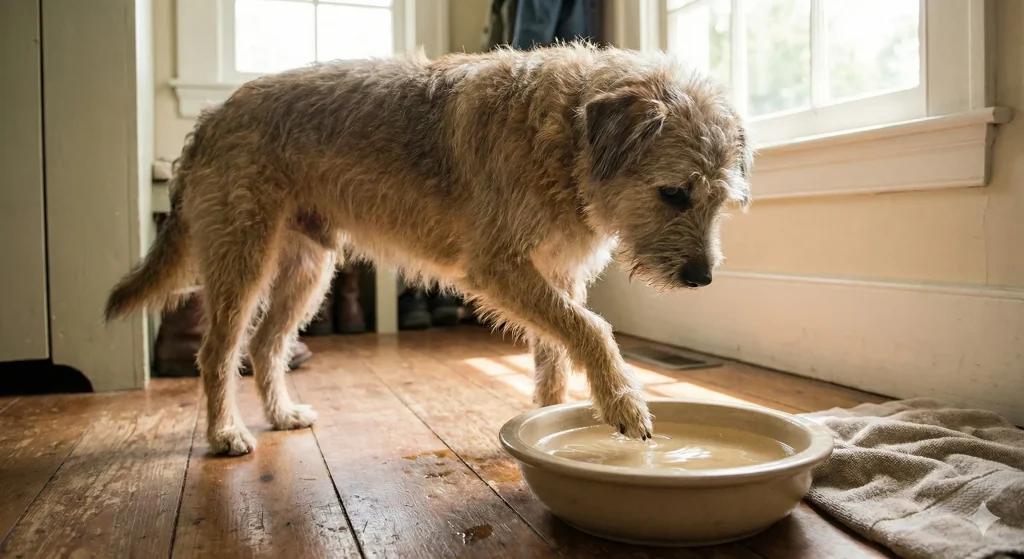
If your dog is obsessed with licking or chewing their paws, an Epsom salt soak is the best immediate relief for dog itching in the extremities.
🐾 Stop the “Itch” at the Door
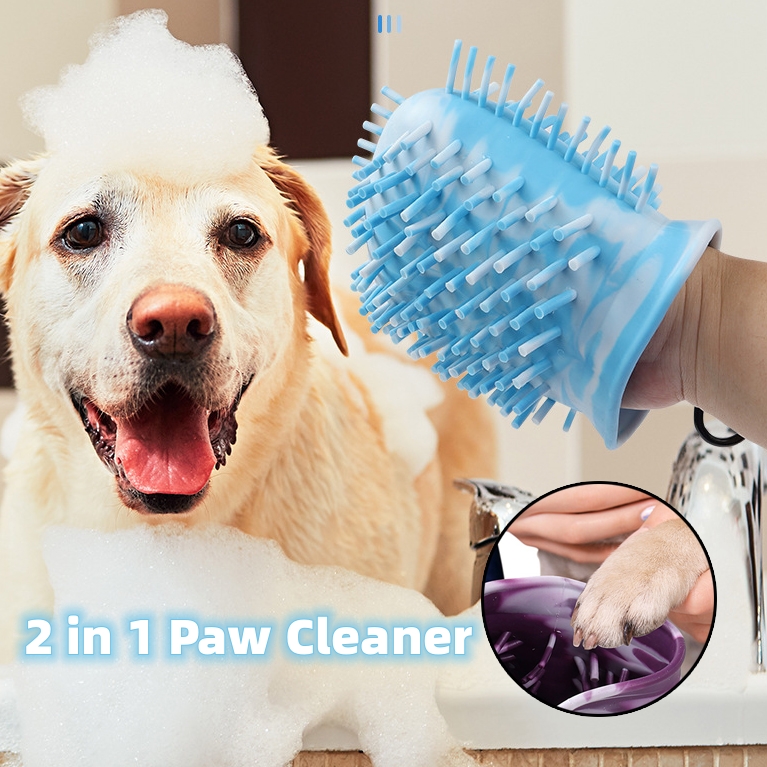
Soaking paws in a bowl is messy and spills everywhere. This 2-in-1 Paw Cleaner removes allergens, mud, and yeast in seconds.
- ✅ Silicone Bristles: Gently scrubs away pollen and grass (the hidden itch triggers).
- ✅ Deep Cleaning: Reaches between toes where yeast and bacteria hide.
- ✅ No Mess: Keeps the dirty water inside the cup, not on your floor.
- The Science: Epsom salt is Magnesium Sulfate. The magnesium absorbs through the skin to relax the tiny muscles and reduce swelling. The salt solution creates an osmotic pressure that helps “draw out” toxins, pollen, and irritants trapped deep between the toes.
- How to Use It:
- The Bath: Dissolve 1 cup of plain Epsom salts (no added fragrances like eucalyptus or peppermint) in a gallon of warm water.
- The Soak: Stand your dog in the tub or use a large bowl for individual paws. Soak for 5–10 minutes.
- The Rinse: Unlike the oatmeal bath, you should rinse the paws with plain fresh water afterward. Salt left on the skin can be drying.
- Warning: Do not let your dog drink the Epsom salt water, as it acts as a natural laxative and will cause diarrhea.
8. Vitamin E Oil (For Scars and Calluses)
Vitamin E is a powerhouse antioxidant that is excellent for small, dry patches, such as a crusty nose, elbow calluses, or healing scars that your dog keeps scratching.
- How to Use It:
- You don’t need expensive “dog balms.” Buy human-grade Vitamin E gel capsules.
- Use a sterile pin to prick the capsule.
- Squeeze the thick oil directly onto the dry skin or callus.
- Massage it in gently. It is very sticky, so try to distract your dog with a treat for a minute while it absorbs.
9. Witch Hazel (Alcohol-Free)
Witch Hazel is a natural astringent, making it perfect for skin that is “weepy,” moist, or oozing (common in hot spots).
- The Science: Like Green Tea, Witch Hazel is rich in tannins which dry out the skin and tighten the pores. It creates a protective layer that helps skin heal.
- Crucial Safety Note: Most drug-store Witch Hazel contains 14% Isopropyl Alcohol. Do not use this. You must buy “Alcohol-Free” Witch Hazel (usually preserved with Vegetable Glycerin) or it will burn your dog.
- How to Use It: Soak a cotton ball in the liquid and dab it gently onto the wet/oozing hot spot 2-3 times a day until the scab forms.
10. Plain Greek Yogurt (Topical Mask)
We usually think of yogurt as food, but it works topically too!
- The Science: The live cultures (Lactobacillus) in yogurt fight off bad bacteria and yeast on the skin’s surface. The lactic acid also acts as a gentle exfoliator to remove dead skin cells.
- How to Use It:
- Smear a thin layer of plain, unsweetened Greek yogurt over the itchy area.
- Let it sit for 15 minutes (this is the hard part—keeping your dog from eating it!).
- Rinse with warm water.
- Tip: This is messy, so it’s best done right before a bath.
Comparison: Natural Remedies vs. Medicated Shampoos
| Feature | Natural Home Remedies | Medicated Shampoos/Creams |
| Cost | Low (Use kitchen ingredients) | High ($20 – $50+) |
| Safety Profile | High (Most are edible) | Variable (Chemicals can be toxic if licked) |
| Speed of Relief | Moderate to Fast | Fast |
| Best For | Mild itching, dry skin, maintenance | Severe infections, mange, deep pyoderma |
| Side Effects | Rare (messy application) | Possible (skin thinning, organ stress) |
Nutrition from the Inside Out: Dietary Itch Relief
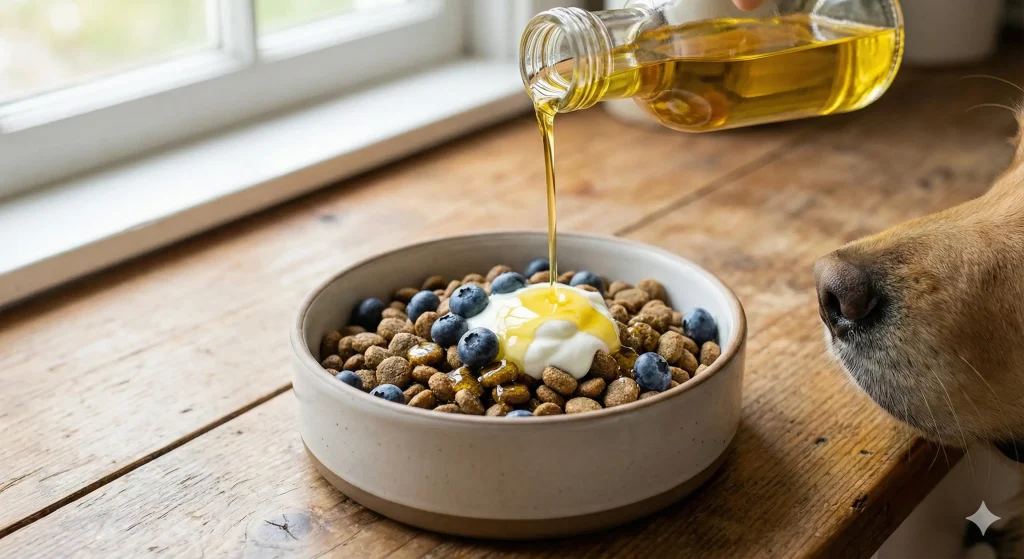
Topical treatments put out the fire, but diet stops the fire from starting.
11. The Power of Omega-3s (Fish Oil)
If your dog’s diet is low in healthy fats, their skin barrier will be weak. Add a high-quality Omega-3 supplement (Fish Oil or Krill Oil) rich in EPA and DHA to reduce systemic inflammation.
12. Probiotics and Gut Health
A huge portion of the immune system lives in the gut. If the gut flora is imbalanced (Leaky Gut), the body becomes hyper-reactive to allergens. Add canine-specific probiotics or plain Greek yogurt to their meals.
13. Quercetin: “Nature’s Benadryl”
Quercetin is a flavonoid found in apple skins that acts as a natural antihistamine. It works best when paired with Bromelain (an enzyme from pineapples).
14. Hydration
Dry skin is dehydrated skin. Ensure fresh water is always available and consider adding bone broth (onion-free) to dry kibble to increase moisture intake.
Safety First: What NOT to Use on Your Itchy Dog
In the quest for itch relief for dogs, avoid these dangerous mistakes:
- Toxic Essential Oils: Tea Tree Oil (in high concentrations), Peppermint, and Wintergreen can be toxic. The Pet Poison Helpline warns that cats and dogs are sensitive to phenols in these oils.
- Human Lotions: Avoid products with Zinc Oxide (like diaper rash cream), which is toxic if ingested.
- Rubbing Alcohol/Hydrogen Peroxide: These destroy healthy tissue and delay healing.
When to See a Veterinarian
Stop home treatment and visit a vet if:
- The skin smells yeasty or foul.
- There are open, pus-filled wounds.
- Your dog is lethargic or losing weight.
- You see bald patches or signs of Mange (Mites).
- Home remedies fail after 48 hours.
Conclusion
Dealing with an itchy dog is a marathon, not a sprint. The best results come from a combining immediate relief for dog itching (like Oatmeal baths and ACV sprays) with long-term preventative care (diet and Omega-3s). By using these home remedies for dogs itchy skin, you are empowering yourself to treat your pet naturally and safely.
I am not a veterinarian. The content provided in this article is based on my personal research and experiences as a dog owner. It is intended for informational and educational purposes only.
This information is not a substitute for professional veterinary advice, diagnosis, or treatment. Always seek the advice of your veterinarian or other qualified animal health provider with any questions you may have regarding a medical condition. Never disregard professional guidance or delay in seeking it because of something you have read on this website.
Frequently Asked Questions
Can I give my dog Benadryl for itching?
Yes, Diphenhydramine (Benadryl) is generally considered safe for dogs. Dr. Ben J. Character (DVM) advises a standard dosage of 1mg per pound of body weight.
Warning: Always check the label to ensure it contains NO alcohol or Xylitol, as Xylitol is toxic to dogs.
How often should I bathe a dog with itchy skin?
It depends on the cause. For environmental allergies (pollen/grass), vets often recommend weekly bathing with a moisturizing, colloidal oatmeal shampoo to physically wash away the allergens. However, avoid over-bathing with harsh soaps, as this can strip natural oils and worsen dry skin.
Is vinegar safe for dog skin?
Vinegar is safe only if diluted. You should always mix it 50/50 with water. Dr. Karen Becker warns never to use vinegar on open wounds or raw skin, as the acidity causes intense stinging and pain.
Why does my dog itch more at night?
This is due to Cortisol levels. Cortisol is the body’s natural anti-inflammatory hormone. Levels naturally drop at night, which means the body has less defense against the inflammation, making the itch feel more intense. Additionally, the house is quieter, making the sound of scratching more noticeable.
Can I use baby oil on my dog?
It is not recommended. Baby oil is a petroleum-based product. While generally non-toxic, it sits on top of the skin and can clog pores. Plant-based oils like Coconut Oil or Olive Oil are superior choices as they absorb into the skin and provide nutritional benefits.