
If you’ve noticed your furry friend scratching constantly, developing red patches, or showing signs of discomfort, you’re not alone. Allergies affect millions of dogs worldwide, and finding effective relief can feel overwhelming. The good news? There are numerous home remedies for a dog with allergies that can provide comfort while being gentle on your pet and your wallet.
Dog Allergies That Every Pet Parent Should Know
Before diving into treatments, it’s essential to understand what’s causing your dog’s discomfort. Dogs can develop allergies to environmental factors (pollen, dust mites, mold), food ingredients (chicken, beef, wheat, soy), or contact allergens (certain fabrics, cleaning products, grass).
Common symptoms include persistent scratching, red or inflamed skin, excessive licking (especially paws), ear infections, watery eyes, and hair loss. If your dog displays these signs, allergies might be the culprit.
It’s important to rule out other causes of itching, such as fleas, which require different treatment approaches. Learn more about remedies for fleas on dogs to ensure you’re treating the right condition.
| Symptom | Best Home Remedy | Application |
|---|---|---|
| Itchy Paws | Apple Cider Vinegar Soak | Soak paws for 5 mins daily |
| All-Over Itch | Oatmeal Bath | 10-15 min lukewarm bath |
| Hot Spots | Baking Soda Paste / Spray | Apply paste for 15 mins |
| Dry/Flaky Skin | Coconut Oil | Massage into skin or add to food |
| Sudden Hives | Benadryl (OTC) | 1mg per lb (Consult Vet) |
Dog Skin Allergy Treatment at Home: Proven Solutions
1. Oatmeal Baths: Nature’s Skin Soother
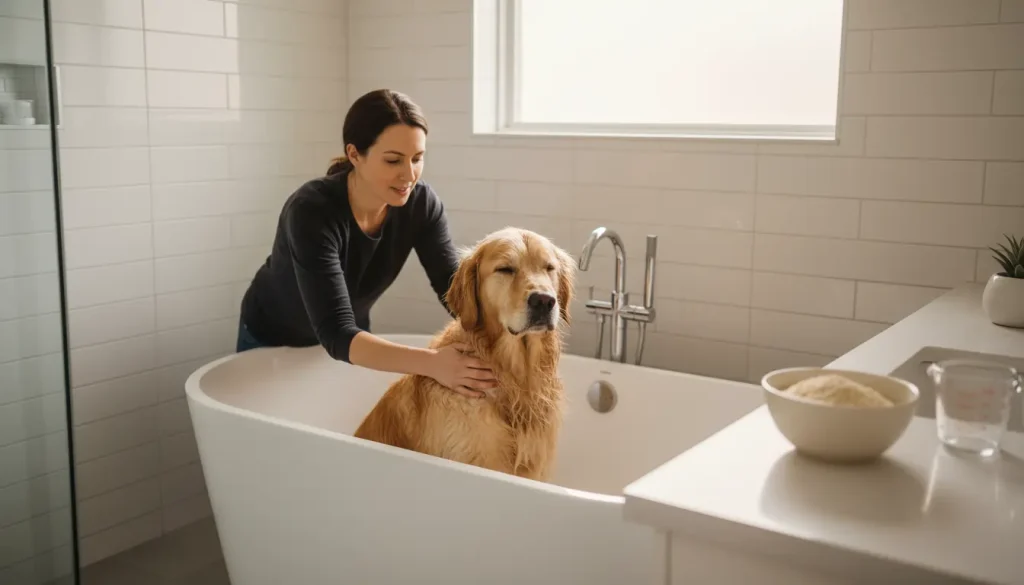
How It Works: Colloidal oatmeal contains avenanthramides and phenols that have anti-inflammatory and antioxidant properties. These compounds calm irritated skin by reducing inflammation and creating a protective barrier that locks in moisture while soothing itchiness.
How to Prepare:
- Take 1 cup of plain, unflavored oatmeal (not instant or flavored varieties)
- Grind it into a fine powder using a blender or food processor until it resembles flour
- Fill your bathtub with lukewarm water
- Add the powdered oatmeal while water is running to ensure even distribution
- Stir thoroughly to dissolve any clumps
Application Method:
- Place your dog in the tub and pour oatmeal water over their body
- Massage into coat, focusing on affected areas
- Let soak for 10-15 minutes
- Rinse thoroughly with cool water and pat dry
Suggestion: For spot treatment on small areas, make a paste with oatmeal powder and water, apply directly to problem areas. Repeat 2-3 times weekly during flare-ups.
2. Apple Cider Vinegar: The Multi-Purpose Remedy

How It Works: Raw apple cider vinegar contains acetic acid and beneficial enzymes that restore the skin’s natural pH balance. This acidic environment inhibits bacterial and fungal growth while reducing inflammation and itching.
How to Prepare:
For Spray:
- Mix equal parts raw apple cider vinegar and filtered water in a spray bottle
- Shake well before use
- Store in cool place for up to 3 weeks
For Paw Soak:
- Fill shallow basin with 2 cups lukewarm water
- Add 1 cup apple cider vinegar
- Stir to combine
Application Method:
- Spray: Mist affected areas, massage in, let air dry. Use twice daily.
- Paw Soak: Have dog stand in basin for 5 minutes, then pat dry. Use once daily.
Suggestion: Never apply to open wounds or raw skin as it will sting. Always use raw, unfiltered apple cider vinegar “with the mother” for maximum benefits.
3. Coconut Oil: Internal and External Relief

How It Works: Coconut oil is rich in lauric acid which converts to monolaurin—a compound with powerful antimicrobial, antiviral, and antifungal properties that combat skin infections while moisturizing dry, irritated skin.
How to Prepare:
For Topical Use:
- If solid, warm jar in hot water for 2-3 minutes until liquefied
- Pour needed amount into small bowl
- Let cool to lukewarm temperature
For Internal Use:
- Measure 1/4 teaspoon per 10 pounds of body weight
- Mix into dog’s food
Application Method:
- Topical: Apply thin layer to itchy patches, massage until absorbed. Use 2-3 times daily.
- Internal: Mix into food once daily, gradually increase to twice daily over one week.
Suggestion: Takes 4-6 weeks to see internal benefits reflected in skin health. Learn more about coconut oil benefits from the American Kennel Club.
4. Aloe Vera: The Cooling Gel

How It Works: Aloe vera contains over 75 active compounds including polysaccharides that stimulate skin growth and repair while providing anti-inflammatory effects that cool inflamed tissue and accelerate healing.
How to Prepare:
From Fresh Plant:
- Cut mature aloe leaf and wash thoroughly
- Let sit upright for 10 minutes to drain yellow latex
- Remove spiny edges and slice lengthwise
- Scoop out clear gel and blend until smooth
Store-Bought:
- Use 100% pure aloe vera gel (no alcohol, fragrances, or additives)
- Refrigerate for extra cooling effect
Application Method:
- Apply thin layer to affected areas using fingers or cotton pad
- Pat gently, let air dry (3-5 minutes)
- Reapply 2-3 times daily
5. Chamomile Tea Compress

How It Works: Chamomile contains flavonoids, particularly apigenin, which binds to receptors that reduce inflammation and has mild antimicrobial properties that help prevent secondary infections.
How to Prepare:
- Boil 2 cups of filtered water
- Add 3-4 chamomile tea bags or 3 tablespoons dried chamomile
- Steep for 10-15 minutes
- Remove tea bags and let cool completely
- Pour into spray bottle or bowl
Application Method:
- Spray on affected areas or use as rinse after bath
- For paw soak, pour into shallow dish and soak paws for 5-10 minutes
- Let air dry—no rinsing needed
Suggestion: Store in refrigerator for up to 5 days. Use as daily foot bath for dogs with paw allergies.
6. Baking Soda Paste

How It Works: Baking soda (sodium bicarbonate) is alkaline, which neutralizes acidic irritants on the skin. It also has mild antiseptic properties and creates an environment hostile to bacteria and fungi.
How to Prepare:
- Mix 2 tablespoons baking soda with 2 tablespoons water
- Stir to create thick, spreadable paste
- Adjust consistency by adding more water or baking soda as needed
Application Method:
- Apply directly to extremely itchy spots or hot spots
- Leave on for 10-15 minutes
- Rinse thoroughly with cool water
7. Epsom Salt Bath

How It Works: Epsom salt (magnesium sulfate) draws out toxins through the skin, reduces swelling, and provides magnesium that helps calm inflammation. It also has mild antibacterial properties.
How to Prepare:
- Fill bathtub with warm water
- Add 1-2 cups of Epsom salt depending on dog’s size
- Stir until salt dissolves completely
Application Method:
- Place dog in bath and let soak for 10 minutes
- Use cup to pour water over areas not submerged
- Rinse with cool water and pat dry
What Can I Give My Dog for Allergies and Itching: Supplement Options
Omega-3 Fatty Acids (Fish Oil)
How It Works: Omega-3 fatty acids (EPA and DHA) reduce production of inflammatory compounds called prostaglandins and leukotrienes. They strengthen the skin barrier and decrease immune system overreactions.
How to Prepare:
- Choose high-quality fish oil or salmon oil supplement formulated for dogs
- Measure 20-55mg per pound of body weight daily (follow product guidelines)
- Refrigerate after opening to prevent rancidity
Application Method:
- Mix liquid oil directly into food once or twice daily
- Or give capsules whole with meals
- Continue for minimum 4-6 weeks to see results
Quercetin: Nature’s Antihistamine
How It Works: Quercetin is a bioflavonoid that stabilizes mast cells, preventing them from releasing histamine during allergic reactions. It works similarly to antihistamine medications but naturally.
How to Prepare:
- Purchase dog-specific quercetin supplements
- Measure 5-10mg per pound of body weight
- Look for formulas with bromelain and papain for better absorption
Application Method:
- Give twice daily with meals
- Divide total daily dose into two servings
- Can take 2-4 weeks for full effectiveness
Probiotics for Gut Health
How It Works: Since 70% of the immune system resides in the gut, probiotics support beneficial bacteria that regulate immune responses, reducing allergic overreactions and inflammation throughout the body.
How to Prepare:
- Choose dog-specific probiotic with multiple bacterial strains
- Follow package directions based on dog’s weight
- Store according to label (some require refrigeration)
Application Method:
- Sprinkle powder over food or give as chewable treat
- Administer once daily with meals
- Give consistently for best results
Nettle Leaf (Stinging Nettle)
How It Works: Nettle contains histamine-blocking compounds and anti-inflammatory properties that reduce allergy symptoms without causing drowsiness. It also supports liver function, helping clear allergens from the body.
How to Prepare:
- Use dried nettle leaf (not fresh, which can sting)
- Measure 1/4 teaspoon per 10 pounds of body weight
- Can be given as dried herb, capsule, or brewed tea
Application Method:
- Mix dried herb directly into food
- Or brew as tea, cool completely, and add to food or water bowl
- Give once daily
Turmeric (Curcumin)
How It Works: Curcumin, the active compound in turmeric, inhibits inflammatory enzymes and reduces production of inflammatory cytokines. It acts as a natural anti-inflammatory without medication side effects.
How to Prepare:
- Use organic turmeric powder
- Measure 1/8 to 1/4 teaspoon per 10 pounds of body weight
- Mix with black pepper (1/20th the amount) and healthy fat like coconut oil
Application Method:
- Create “golden paste”: Mix turmeric, pinch of black pepper, and coconut oil
- Add to dog’s food once daily
- Start with smaller amounts and gradually increase
Suggestion: Black pepper and fat dramatically improve absorption. Turmeric causes yellow staining—protect light surfaces.
Natural Remedies for Dog Allergies in Humans: When You’re Allergic to Your Pet
Living with a dog when you’re allergic doesn’t mean giving up your beloved companion. These natural remedies for dog allergies in humans help you coexist comfortably.
HEPA Air Filtration System
How It Works: HEPA filters capture 99.97% of airborne particles 0.3 microns or larger, including pet dander, saliva proteins, and urine particles that trigger allergic reactions.
How to Prepare:
- Purchase HEPA air purifier sized for your room square footage
- Place in bedroom and main living areas
- Keep doors closed when running for maximum effectiveness
Application Method:
- Run continuously in bedroom at night
- Run in common areas where dog spends time
- Replace filters every 3-6 months as directed
Suggestion: Create bedroom as dog-free zone for 8 hours nightly allergen-free recovery time. The Asthma and Allergy Foundation of America provides guidance on air quality management.
Regular Dog Bathing Protocol
How It Works: Bathing removes dander (dead skin cells) and saliva proteins from your dog’s coat before they become airborne and trigger your allergies.
How to Prepare:
- Use hypoallergenic dog shampoo
- Fill tub with lukewarm water
- Have towels ready for drying
Application Method:
- Bathe dog weekly to significantly reduce dander
- Thoroughly rinse all shampoo (residue increases dander)
- Dry completely with towels or low-heat dryer
- Have non-allergic family member perform bathing when possible
Saline Nasal Rinse
How It Works: Saline solution mechanically flushes allergens (dander, proteins) from nasal passages, reducing direct contact with mucous membranes and decreasing allergic response.
How to Prepare:
- Mix 1/4 teaspoon non-iodized salt with 8 ounces distilled water
- Add tiny pinch of baking soda (optional, reduces burning)
- Pour into neti pot or squeeze bottle
Application Method:
- Lean over sink, tilt head sideways
- Pour solution into upper nostril, let drain from lower nostril
- Repeat on other side
- Use twice daily (morning and evening)
Suggestion: Always use distilled or previously boiled water, never tap water for safety.
Natural Antihistamine Foods
How It Works: Certain foods contain quercetin, vitamin C, and omega-3s that naturally reduce histamine production and stabilize immune cells that trigger allergic reactions.
Foods to Include:
- Vitamin C sources: citrus fruits, bell peppers, strawberries, broccoli
- Quercetin sources: apples, onions, berries, green tea
- Omega-3 sources: fatty fish, walnuts, flaxseeds, chia seeds
Application Method:
- Incorporate these foods into daily diet
- Eat variety of antihistamine-rich foods at each meal
- Be consistent for cumulative effect over weeks
How to Stop Dog Allergies Immediately: Quick Relief Strategies
When your dog experiences acute allergic reaction, quick action provides rapid relief. Here’s how to stop dog allergies immediately.
Cool Water Rinse
How It Works: Cool water physically removes allergens (pollen, grass proteins, dust) from your dog’s coat and skin while constricting blood vessels to reduce inflammation and numb nerve endings for instant itch relief.
How to Prepare:
- Use cool (not ice cold) water from hose or bathtub
- No soap needed for emergency rinse
- Have towels ready
Application Method:
- Immediately rinse dog with cool water after allergen exposure
- Focus on paws, belly, face, and armpits
- Rinse for 3-5 minutes
- Pat dry with clean towel
Baking Soda Paste for Immediate Relief
How It Works: Baking soda’s alkaline properties neutralize acidic irritants causing immediate itching while providing cooling sensation and creating unfavorable environment for bacteria.
How to Prepare:
- Mix 3 tablespoons baking soda with 1 tablespoon water
- Stir into thick, spreadable paste
- Make fresh batch for each use
Application Method:
- Apply thick layer directly to intensely itchy spots
- Leave on for 10-15 minutes
- Rinse thoroughly with cool water
Ice Pack Cold Compress
How It Works: Cold temperature constricts blood vessels, reducing blood flow to inflamed areas. This decreases swelling, numbs nerve endings that transmit itch signals, and slows release of inflammatory chemicals.
How to Prepare:
- Wrap ice pack, frozen vegetables, or ice cubes in thin towel
- Never apply ice directly to skin
- Have multiple ice packs ready if treating several areas
Application Method:
- Apply to hot spots or swollen areas for 10 minutes
- Remove for 10 minutes to prevent ice burn
- Repeat cycle 2-3 times
- Use several times daily during acute flare-ups
Witch Hazel Spray
How It Works: Witch hazel contains tannins that have astringent and anti-inflammatory properties. It tightens tissues, reduces oozing from hot spots, and provides cooling relief while fighting bacteria.
How to Prepare:
- Purchase alcohol-free witch hazel
- Pour into clean spray bottle
- Can add to refrigerator for extra cooling
Application Method:
- Spray directly on red, inflamed, or oozing areas
- Let air dry—do not rinse
- Apply 3-4 times daily during acute symptoms
Environmental Management: Prevention is Key
Daily Paw Wiping Routine
How It Works: Paws collect environmental allergens like pollen, grass proteins, and mold spores. Removing these immediately after outdoor exposure prevents your dog from ingesting them through licking and spreading them throughout your home.
How to Prepare:
- Keep pet-safe wipes or damp cloths near door
- Fill small basin with water for foot soaking option
- Have towel ready for drying
Application Method:
- Wipe each paw thoroughly after every walk
- Clean between toes where allergens accumulate
- Wipe belly and face if dog rolled in grass
- Perform before dog enters home
HEPA Vacuum Schedule
How It Works: Regular vacuuming with HEPA filtration removes allergen particles from carpets, furniture, and floors before they become airborne and trigger reactions.
How to Prepare:
- Invest in vacuum with sealed HEPA filtration system
- Empty canister or change bags frequently
- Clean vacuum filters monthly
Application Method:
- Vacuum all floors and furniture daily during allergy season
- Use upholstery attachment on dog’s favorite spots
- Vacuum in multiple directions for thorough removal
Washable Bedding Protocol
How It Works: Dog bedding harbors dander, saliva, and environmental allergens. Weekly hot water washing kills dust mites and removes accumulated allergens.
How to Prepare:
- Choose machine-washable dog beds and covers
- Keep backup bedding for rotation
- Use hypoallergenic, fragrance-free detergent
Application Method:
- Wash all dog bedding in hot water (130°F minimum) weekly
- Add 1/2 cup white vinegar to rinse cycle as natural deodorizer
- Dry completely to prevent mold growth
Diet Elimination Trial
Food allergies can also cause digestive issues alongside skin problems. If your dog experiences excessive gas or bloating along with itching, check out our guide on remedies for gas in dogs for comprehensive digestive support.
How It Works: Food allergies trigger immune responses causing skin inflammation and itching. Elimination diets identify specific food allergens by removing common triggers and systematically reintroducing them.
How to Prepare:
- Choose limited-ingredient food with novel protein (venison, duck, rabbit)
- Select food with single carbohydrate source (sweet potato, peas)
- Avoid all treats, table food, and flavored medications during trial
Application Method:
- Feed elimination diet exclusively for 8-12 weeks
- Monitor and document symptom changes weekly
- After improvement, reintroduce one ingredient at a time every 2 weeks
- Watch for reaction to identify specific allergens
Suggestion: Requires strict compliance—even tiny amounts of eliminated ingredients can trigger reactions and invalidate the 8-12 week trial period.
When to Seek Veterinary Care
While home remedies for a dog with allergies are effective for mild to moderate cases, some situations require immediate professional intervention:
- Severe facial swelling, especially around eyes or muzzle
- Difficulty breathing, excessive coughing, or choking sounds
- Collapse, extreme lethargy, or disorientation
- Hives covering large portions of body
- Persistent symptoms despite 2-3 weeks of home treatment
- Secondary infections with foul odor, yellow/green discharge, or significant oozing
- Persistent ear infections or head shaking
- Self-trauma causing open wounds or bleeding
Your veterinarian can provide allergy testing, prescription medications, or immunotherapy (allergy shots) for severe cases. Home remedies for dogs with allergies work best for mild to moderate symptoms and as complementary treatments alongside veterinary care.
Creating Your Home Remedy Toolkit
Having these items readily available ensures you can address symptoms immediately:
Essential Items:
- Plain oatmeal and blender
- Raw apple cider vinegar
- Organic virgin coconut oil
- 100% pure aloe vera gel
- Chamomile tea bags
- Baking soda
- Epsom salt
- High-quality fish oil supplements
- Dog-specific probiotic
- HEPA air purifier
- Pet-safe wipes
- Spray bottles
- Small soaking basin
Optional But Helpful:
- Quercetin supplements
- Nettle leaf (dried)
- Witch hazel (alcohol-free)
- Turmeric powder
- Hypoallergenic dog shampoo
- Ice packs
- Elizabethan collar
Long-Term Success Strategy
Successfully managing dog skin allergy treatment at home requires consistency, patience, and multi-faceted approach. Most natural remedies need 4-6 weeks of regular use before showing full benefits.
Keep detailed symptom journal noting:
- Dates and severity of flare-ups
- Weather conditions and pollen counts
- Foods consumed
- Remedies used and their effectiveness
- New environmental exposures
This documentation helps identify specific triggers and most effective treatments for your individual dog.
Combine multiple approaches for best results: environmental management + dietary support + topical treatments + immune-supporting supplements. Think of allergy management as layered defense—each intervention reduces overall allergen burden and inflammatory response.
Conclusion: Empowering Pet Parents
Managing your dog’s allergies naturally is achievable with proper knowledge and consistent application. These home remedies for a dog with allergies provide safe, effective relief while supporting overall health without pharmaceutical side effects.
Whether you’re seeking what can I give my dog for allergies and itching or need comprehensive dog skin allergy treatment at home solutions, the remedies outlined here offer real, measurable relief. Remember that every dog responds differently—patience and observation help you discover the ideal combination for your furry companion.
By taking proactive, natural approach to managing allergies, you’re not just treating symptoms—you’re supporting your dog’s overall wellbeing and quality of life. Your dedication to finding gentle, effective solutions strengthens the bond between you and your beloved pet.
I am not a veterinarian. The content provided in this article is based on my personal research and experiences as a dog owner. It is intended for informational and educational purposes only.
This information is not a substitute for professional veterinary advice, diagnosis, or treatment. Always seek the advice of your veterinarian or other qualified animal health provider with any questions you may have regarding a medical condition. Never disregard professional guidance or delay in seeking it because of something you have read on this website.
Frequently Asked Questions (FAQs)
How quickly do home remedies work for dog allergies?
Timeline varies by remedy type. Topical treatments like oatmeal baths, cold compresses, and baking soda paste provide immediate relief within 10-30 minutes. However, systemic improvements from supplements (omega-3 fatty acids, probiotics, quercetin) and dietary changes typically require consistent use for 4-6 weeks before showing significant results. For home remedies for a dog with allergies to be most effective, maintain regular treatment schedule and give each approach adequate time before switching strategies.
Can I use multiple home remedies simultaneously for my dog’s allergies?
Yes, combining home remedies for a dog with allergies is often most effective approach. For example, use omega-3 supplements and probiotics internally while applying oatmeal baths and coconut oil topically. However, introduce new remedies one at a time (waiting 7-10 days between additions) to monitor your dog’s response and identify any adverse reactions. Avoid giving multiple supplements serving the same function to prevent excessive dosing.
What’s the best dog skin allergy treatment at home for hot spots?
For hot spots (acute moist dermatitis), most effective dog skin allergy treatment at home involves immediate cool water rinse to clean the area, followed by cold compress for 10 minutes to reduce inflammation. Then apply either pure aloe vera gel or baking soda paste for soothing relief. Witch hazel spray works well for oozing hot spots. Keep area clean and dry, and prevent licking with Elizabethan collar. If hot spots don’t improve within 24-48 hours or worsen, seek veterinary care as they may require antibiotics.
Are natural remedies for dog allergies in humans as effective as medications?
Natural remedies for dog allergies in humans can be highly effective, especially combined with environmental management. Regular use of HEPA filtration, frequent cleaning, saline rinses, and creating dog-free sleeping zones can reduce symptoms by 50-70% for many people. However, severe allergies may require medication. Natural approaches work best as preventive measures and for mild to moderate symptoms. They’re excellent complementary treatments alongside prescribed allergy medications.
How can I stop dog allergies immediately during a severe reaction?
To stop dog allergies immediately, start with cool water rinse to remove allergens from coat and skin. Apply ice pack wrapped in towel to swollen or intensely itchy areas for instant relief. Baking soda paste provides rapid itch relief for localized spots within 5 minutes. For widespread reactions, immediate oatmeal bath calms multiple affected areas. However, if your dog shows signs of anaphylaxis (severe facial swelling, difficulty breathing, collapse), seek emergency veterinary care immediately—severe reactions require professional treatment.
What can I give my dog for allergies and itching that’s completely natural?
When considering what can I give my dog for allergies and itching naturally, omega-3 fatty acid supplements (fish or salmon oil) are highly effective for reducing inflammation systemically. Quercetin supplements act as natural antihistamines without drowsiness. Probiotics support immune function and reduce allergic responses. For immediate topical relief, coconut oil, aloe vera gel, or chamomile tea rinses work well. Always introduce supplements gradually and use high-quality products specifically formulated for dogs.
How do I know if my dog’s allergies are food-related or environmental?
Food allergies typically cause year-round symptoms including itchy skin, ear infections, and gastrointestinal issues. Environmental allergies often follow seasonal patterns (worse during spring or fall) and primarily cause itching, especially of the face, paws, and ears. To determine the cause, your veterinarian may recommend an elimination diet lasting 8-12 weeks using novel protein sources. If symptoms improve during the trial and return when regular food is reintroduced, food allergies are likely.
How often should I bathe my dog with allergies?
For dog skin allergy treatment at home, bathing frequency depends on allergy severity and type. Dogs with environmental allergies benefit from weekly baths using hypoallergenic or oatmeal-based shampoos to remove allergens from their coat. During severe flare-ups, you can bathe every 3-4 days. However, over-bathing strips natural oils and can worsen dry skin, so never exceed twice weekly without veterinary guidance. Between full baths, rinse your dog with plain water to remove allergens.
Will home remedies cure my dog’s allergies permanently?
Home remedies manage and significantly reduce allergy symptoms but rarely “cure” allergies permanently. Allergies result from immune system hypersensitivity, which is typically a lifelong condition. However, consistent use of natural remedies can minimize symptoms to the point where your dog lives comfortably without pharmaceutical intervention. The goal is effective symptom management and improved quality of life rather than complete elimination of the allergic response.
Can puppies use the same home remedies as adult dogs?
Most home remedies for a dog with allergies are safe for puppies, but dosages must be adjusted for their smaller body weight and developing systems. Topical treatments like oatmeal baths, aloe vera, and coconut oil are generally safe for puppies over 8 weeks old. For supplements, always consult your veterinarian before giving to puppies, as their immune systems are still developing. Start with half the adult dose and monitor closely for any adverse reactions. Avoid essential oils and strong herbal remedies in very young puppies.
Comments are closed.